Roman Itálica
Half an hour from Seville, the first Roman city founded in Spain keeps one of the empire’s great amphitheatres and floors of mosaics lying where they were laid — the birthplace of Trajan for certain, and of Hadrian by argument.
The short version
- Buses run Seville’s Plaza de Armas to Santiponce in about thirty minutes at city fares, dropping by the site entrance — with entry at a token fee and free for EU citizens, the alarm’s costs-almost-nothing clause is literal; site information via juntadeandalucia.es.
- Itálica was the first Roman city founded in Hispania — 206 BC, Scipio’s settlement of veterans after the battle of Ilipa — making the ground itself the peninsula’s oldest Roman claim.
- The emperor arithmetic per the alarm: Trajan was born here beyond dispute; Hadrian’s birth is claimed by Itálica and argued by historians (Rome has the competing paperwork), and his lavish rebuilding of his family’s hometown is the certainty the argument stands on.
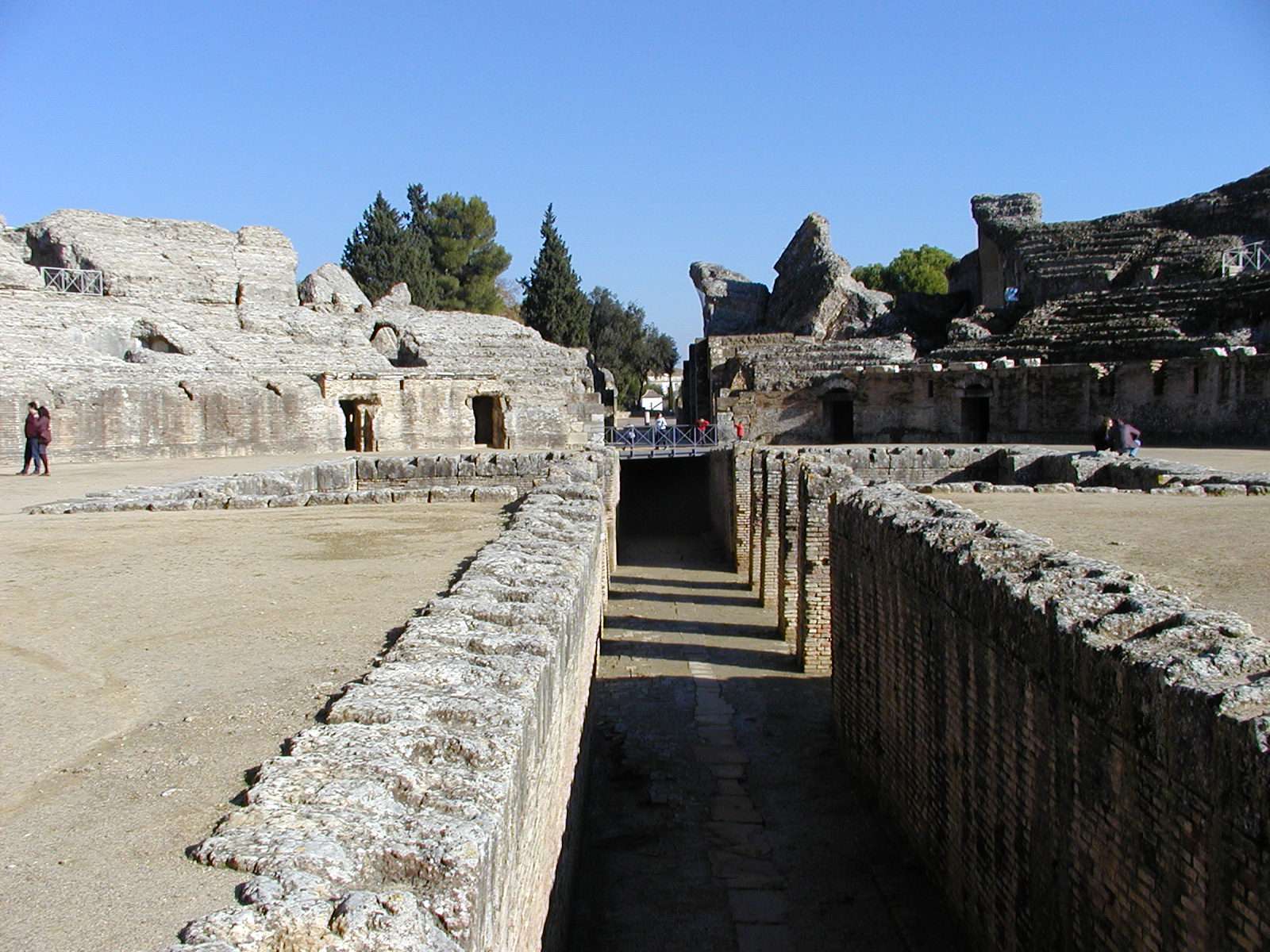
- The amphitheatre is the headline: capacity around 25,000 — among the empire’s largest, outsized for the city on imperial favor — with the arena floor, the subterranean pit, and the seating banks walked freely.
- The mosaics lie in situ across the Hadrianic new town’s house plots: the House of the Birds’ aviary catalogue, the Neptune floor, and the Planetarium mosaic’s seven day-gods among the standouts, viewed from walkways over the actual floors.
- Game of Thrones borrowed the amphitheatre for the Dragonpit — a fact the site wears lightly — and the San Isidoro del Campo monastery at Santiponce’s edge (Guzmán tombs, mudéjar cloisters) adds a serious half-hour for the thorough.

Getting there
The bus per the alarm is the whole logistics — Plaza de Armas, half an hour, done — with taxis trivial and drivers parking free by the gate. The morning rule is the page’s one law: the site is an open plateau of stone and dust, Seville’s heat arrives on schedule, and the difference between a ten a.m. and a two p.m. visit in July is the difference between a great morning and an endurance event. Water travels with you; the village’s bars handle the after.
The visit
Enter past the theatre’s edge and work the Hadrianic grid: the broad paved streets — wide enough to read the imperial ambition — leading plot by plot through the mosaic houses, each floor viewed from its walkway with the birds, gods, and geometries exactly where their owners commissioned them. The Traianeum’s platform marks the temple Hadrian raised to his adoptive father; the argument the alarm licensed lives on the interpretive signs, which give Trajan the certainty and Hadrian the asterisk with academic good manners. Then the amphitheatre: down the vomitorium tunnels, onto the arena floor over the beast-pit’s exposed underworld, and up the banks to feel the 25,000 — the Dragonpit recognition landing for those who carry it. The old town’s unexcavated majority sleeps under modern Santiponce, which is its own honest lesson in how archaeology actually sits. San Isidoro del Campo closes the trip for the committed; the bus home runs on city rhythm.
When to go
October through May is the site’s true season — mild, walkable at any hour, with spring laying wildflowers through the ruins. Summer enforces the alarm’s morning rule without exceptions: first hours only, water in hand, and the afternoon conceded to Seville’s shade. The annual dance-and-theatre festivals staged in the amphitheatre (summer evenings) invert the rule beautifully for those whose dates align — ancient seating, living performance, and the heat finally off duty.
Frequently Asked Questions
What’s the actual Hadrian dispute?
Ancient sources split: the Historia Augusta says Rome, family origin and later tradition say Itálica, and historians read the evidence toward a Rome birth with an Itálica bloodline. The site’s signage presents exactly that split. Trajan’s Itálica birth carries no such argument — one emperor certain, one contested, per the alarm.
Why is the amphitheatre so big for a small city?
Imperial patronage — Hadrian elevated his ancestral town with a building program far past its population, the amphitheatre included. It ranked among the empire’s largest as a statement, not a seating necessity, which is precisely what makes it read so dramatically in open country today.
Are the mosaics originals?
The floors are in situ originals under open sky or light cover, walked past on raised paths — weathered where centuries demanded and vivid where protection allowed. A few celebrated pieces from Itálica live in Seville’s Archaeological Museum; what remains on site is the real ground, which is the visit’s whole argument.
Is it worth it against Seville’s own monuments?
As a half day, comfortably — the city has nothing Roman at this scale, and the site’s emptiness (you’ll share 25,000 seats with dozens) is the anti-Alcázar experience. Antiquity people rank it essential; everyone else gets a great morning for pocket change.
Itálica or Jerez from Seville?
Jerez (documented on this network) for sherry bodegas and horses at an hour’s train; Itálica for Rome at half the distance and a hundredth the spend. Morning-plus-afternoon travelers note they stack: Itálica’s early hours and Jerez’s evening tabancos have never met a conflict.