Arcos de la Frontera from Seville
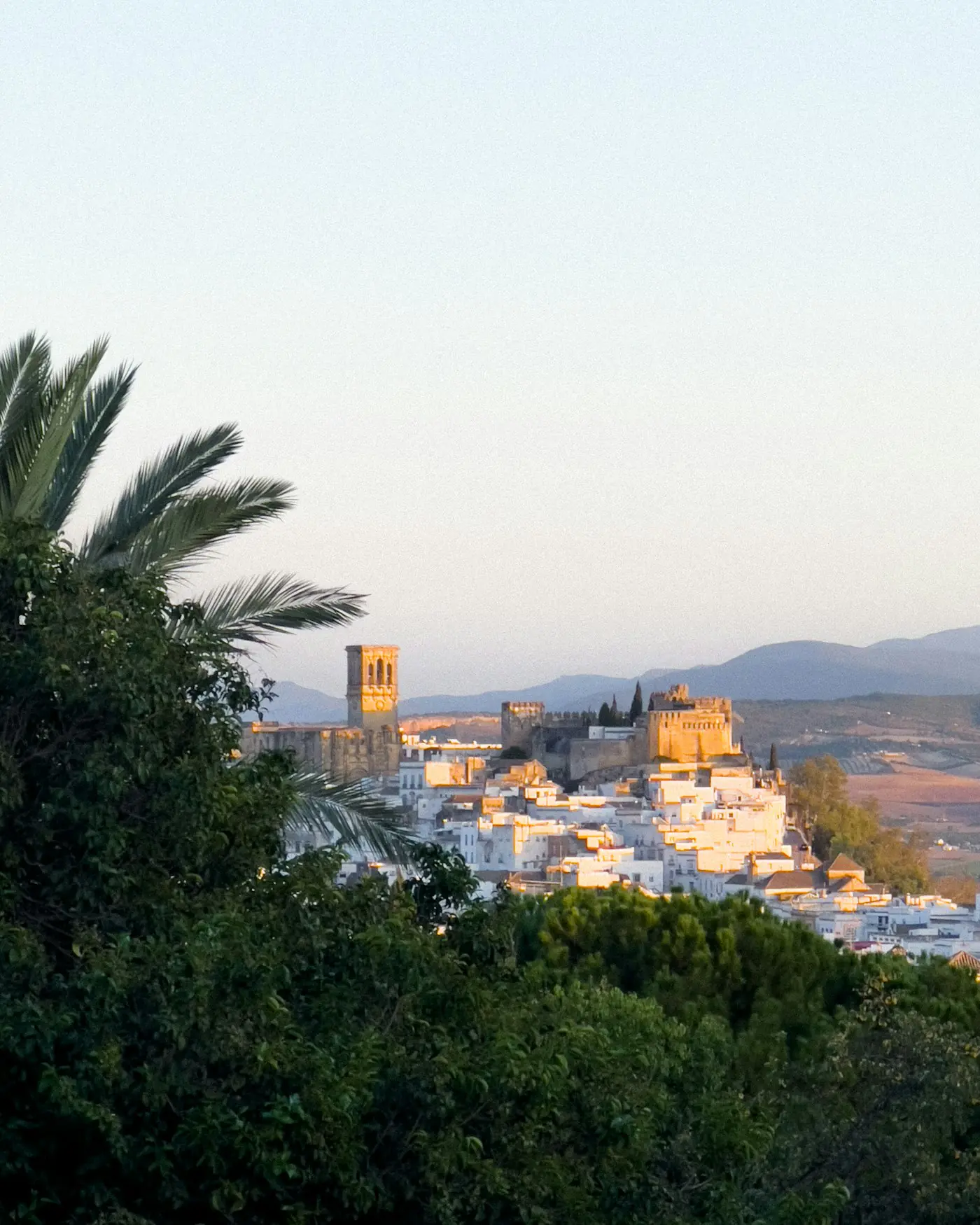
A ridge of whitewash above a river bend — the gateway to the pueblos blancos, two hours south by bus.
The short version
- Damas buses run direct from Seville’s Plaza de Armas station to Arcos in about two hours for €11–13 — timetables at damas-sa.es. The alternative rail route — train to Jerez, then a half-hour local bus — adds flexibility on thin days.
- Arcos is the classic first pueblo blanco: a single ridge of white houses ending in a sandstone cliff that drops sheer to the Guadalete river bend below.
- The Plaza del Cabildo’s balcony — the Mirador de la Peña Nueva — hangs over that drop and delivers the town’s money view for nothing; the parador beside it sells the same view with coffee.
- Basílica de Santa María and the ridge-top lanes around it are the wandering: arches over alleys, flower pots on whitewash, and the castle (private) anchoring the skyline. Town info at arcosdelafrontera.es.
- Lunch on the ridge runs to slow Andalusian classics — but the last bus back sets the day’s clock, so check the evening departures on arrival and book nothing you cannot walk away from by then.

Getting there
Damas runs direct buses from Seville’s Plaza de Armas to Arcos several times daily, about two hours, €11–13 each way — book the return leg when you buy the outbound on busy days. The rail option goes via Jerez de la Frontera: frequent trains from Santa Justa in about an hour, then a local bus up to Arcos in 30–40 minutes. Drivers take the A-4 and A-382 in about 90 minutes; parking waits at the foot of the old town, not in it.
The day
The bus drops you in the lower town; everything you came for is up. Climb to the Plaza del Cabildo first and take the Peña Nueva balcony slowly — the cliff falls away to the Guadalete’s loop, the plain runs to the sierra, and the reason every ‘white towns’ route starts at Arcos is suddenly self-evident. Santa María’s basilica fills the square’s far side, Gothic bones under later riches; the lanes behind it — Callejón de las Monjas, the arched buttresses, the convent corners — are the town’s real museum, and getting lost in them takes exactly the right amount of time. Lunch long at a ridge-top table or the parador’s terrace, then work downhill through the newer town’s shops. Drivers continue deeper into the pueblos blancos — Grazalema, Zahara — but by bus, Arcos alone is the day, and it is enough.
When to go
March through June and September through November: the ridge bakes in high summer, and the climbing is the visit. Spring lines the balconies with geraniums; Semana Santa processions through those lanes are spectacular and space-negative. Winter is mild, quiet, and prone to valley mists that turn the cliff view into theatre — a fair trade for shorter days and thinner buses.
Frequently Asked Questions
How do you get to Arcos de la Frontera from Seville?
Direct Damas bus from Plaza de Armas, about two hours, €11–13; or train to Jerez (about an hour) plus a 30–40 minute local bus. Check return times on arrival — evening departures are few.
Why Arcos over the other white towns?
Reachability and drama: it is the pueblo blanco a car-free traveler can actually do from Seville, and its cliff-edge setting over the Guadalete is the most theatrical of the lot. The rest of the route needs wheels.
What does it cost?
The town is free. The basilica and the odd convent or museum charge small entries; the famous viewpoint costs nothing. Your money goes on lunch and the bus.
How steep is it really?
Steep enough to be the workout of the day: the old town rides a narrow ridge, lanes climb hard, and the cobbles polish slick. Grip-soled shoes and unhurried pacing solve it; anyone mobility-limited should taxi to the top and explore on the flat spine.
Is there a castle to visit?
The castle crowns the ridge but remains privately owned and closed — you photograph it, you don’t tour it. The compensations are Santa María, the lanes, and that balcony.