A Day in Cádiz
Out where the salt flats meet the Atlantic, a sea-walled city claims three thousand years of continuous habitation and wears them lightly. The train from Seville runs direct, and nothing in town needs booking.
The short version
- Direct trains run Santa Justa to Cádiz in about 1h40 roughly hourly, arriving a ten-minute walk from the old town’s gates — fares and times at renfe.com; the final approach crosses the Bay’s salt flats and flamingo shallows.
- Cádiz claims the title of Western Europe’s oldest continuously inhabited city — Phoenician Gadir, three thousand years back — and the archaeology keeps politely agreeing.
- The Torre Tavira, tallest of the old town’s 100-plus merchant watchtowers, runs a camera obscura show: the live city projected onto a dish in a darkened room, narrated — the best fifteen-minute orientation in Andalusia.
- The cathedral’s gold-glazed dome anchors the seafront skyline; the climbable Levante tower and the crypt (composer Manuel de Falla rests there) come with the modest ticket.
- La Caleta beach curls between two castles at the old town’s tip — the causeway walk toward San Sebastián’s lighthouse castle depends on current access, so take the view as the guarantee and the crossing as a bonus.
- The freiduría is the local institution: fried fish sold by weight in paper cones, eaten standing or seawall-seated — tortillitas de camarones (shrimp fritters) are the mandatory add.

Getting there
Santa Justa’s Cádiz platforms run the direct service through Jerez and the marsh country — the left-side window pays for itself in the final twenty minutes as the bay, the salt pyramids, and the wading birds slide past. The station drops you at the old town’s edge; everything after is on foot by design and necessity. Drivers spend the same ninety-plus minutes and then negotiate a peninsula that treats cars as an admission error. Evening returns run late enough for a full day plus a seawall sunset.
The day
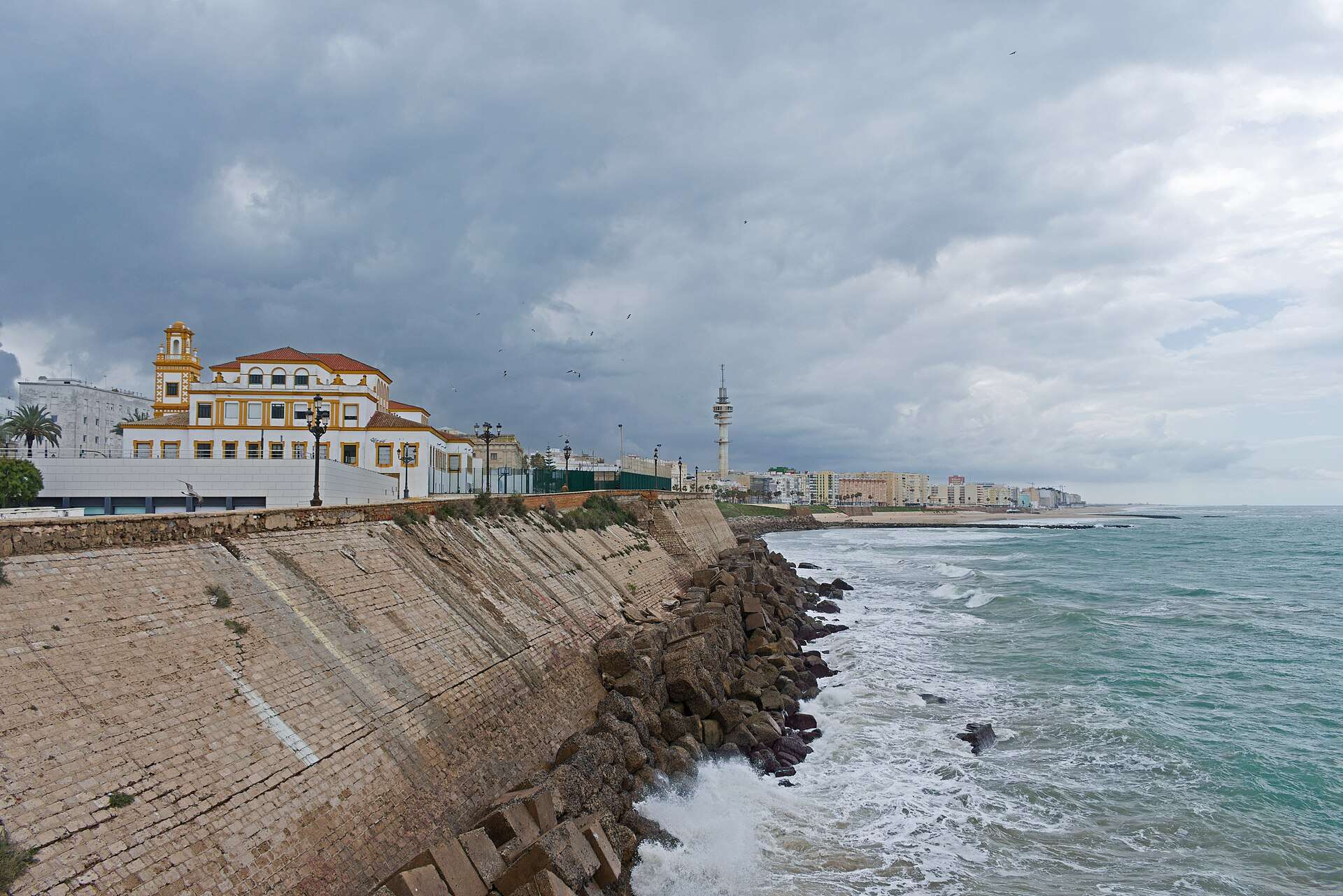
Tavira first, per the alarm — the camera obscura’s live-city show plus the tower-top view maps everything you’re about to walk. Then the grid: Calle Ancha’s shopfronts, the flower-market square, the Central Market’s fish hall doing its morning theater. Lunch is the freiduría cone eaten toward the water. The afternoon takes the cathedral dome and tower, the Roman theatre tucked behind (free, and casually enormous), and the long seawall circuit — Campo del Sur’s Havana-lookalike frontage, La Caleta’s beach between its castles, the Genovés park’s dragon trees. Sunset from the seawall with the Atlantic doing the lighting is the city’s daily free event; the train home runs against a sky most cities would ticket.
When to go
Spring and autumn run ideal — Atlantic-cooled walking weather while Seville bakes. Summer is the escape-valve season: ten degrees kinder than the capital, beaches earning their keep, and evening paseo culture at full strength. February’s Carnival is Spain’s sharpest — two weeks of costumed satire choirs (chirigotas) filling the streets, booked lodging and standing-room trains included. Winter stays mild and bright with the town returned to its own rhythms; the camera obscura works its trick in every season.
Frequently Asked Questions
Is the oldest-city claim real?
Phoenician founding around 1100 BC gives the claim its spine, and continuous habitation since is well supported — rivals exist around the Mediterranean, but Cádiz’s case is as good as Western Europe offers. The town states it with a shrug, which is somehow more convincing.
Cádiz or Córdoba as the Seville day trip?
Córdoba for the Mezquita’s singular interior (documented on this network); Cádiz for sea, seafood, and street life with monuments as seasoning. History-of-architecture day: Córdoba. Atmosphere-and-Atlantic day: here. Summer answers it by temperature.
What’s a camera obscura doing in Cádiz?
The Tavira tower installed the periscope-and-dish setup in the 1990s atop the old watchtower where merchants once scanned for their ships — the show narrates the live moving city, ships and laundry included. Sessions run every half hour or so; the first of the day is the least booked.
Can I combine Cádiz with Jerez?
The same rail line makes Jerez a legitimate stop — sherry bodega tours want advance booking and midday slots. It costs Cádiz hours; sherry devotees split the day, everyone else gives Cádiz the whole thing and Jerez its own trip.
Where’s the definitive fried fish?
Any freiduría with a queue of locals and paper cones — the Barrio de la Viña’s institutions around La Caleta hold the reputation. Order by weight, add the shrimp fritters, and eat within sight of the water that supplied it.