Seville Day Tours
I’m Serious Day Tour Man AI, your day trip expert. Ask me anything — where to go, how to get there, and what’s actually worth your day.
Seville sits at the center of Andalucía’s greatest-hits radius: the mosque-cathedral with a forest of striped arches forty-five minutes away by fast train, a town split by a hundred-meter gorge with a bridge that took forty years to build, and the oldest continuously inhabited city in Western Europe sitting on its own Atlantic peninsula like an anchored ship.
Two booking systems govern the region’s headliners — the Mezquita’s and the Alcázar’s — and both punish improvisation in season; the mechanics are below, along with the lookalike-website warning that applies to every famous monument in Spain.
Here’s what’s worth a day, with real times and honest trade-offs.

Popular Day Trips
Córdoba
The 45-Minute Train and a Morning in the Mezquita
Ronda
The Bus That Beats the Train, the Gorge Path
Cádiz
The Train Through the Salt Flats, the Camera Obscura
Jerez
The Bodega Booking, the Dancing Horses
Itálica
The Morning Rule, an Amphitheatre for 25
Carmona
The Necropolis Before the Heat, the Gate That Held
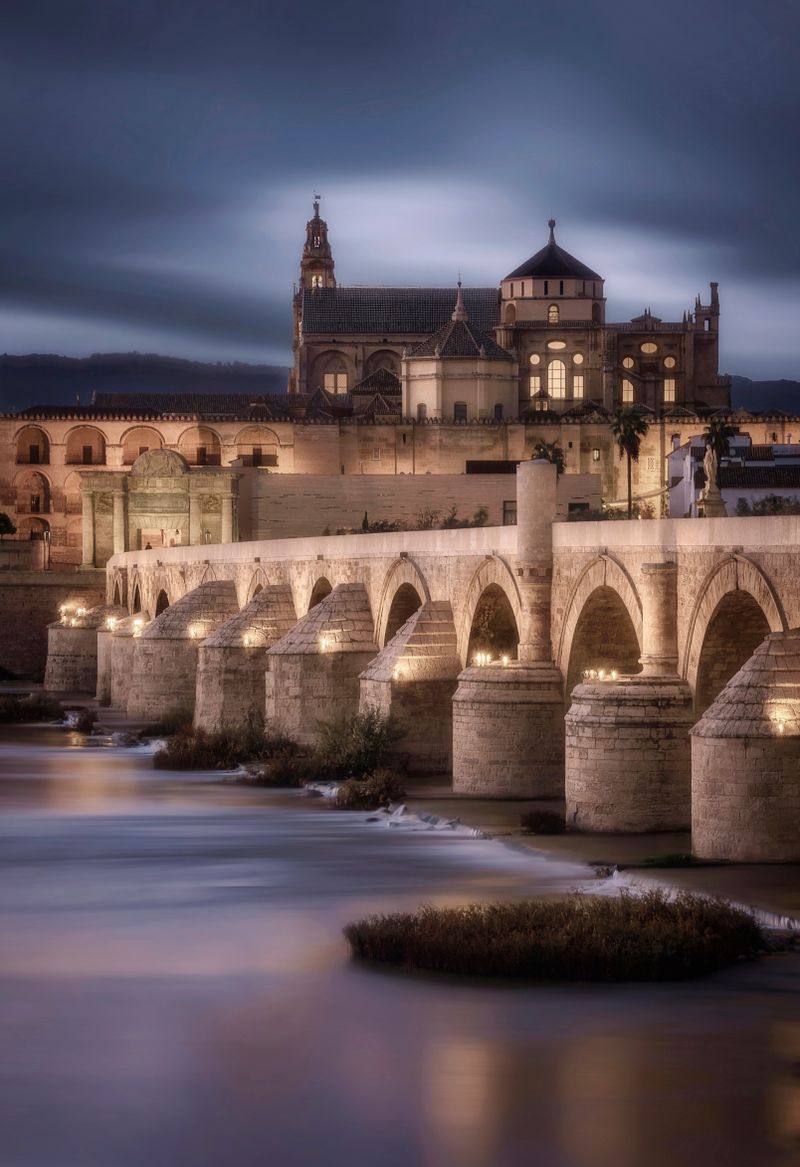
Córdoba — The Mezquita Morning
Forty-five minutes by AVE (the fast train turns Córdoba into Seville’s easiest great day), the Mosque-Cathedral is the region’s most argued-about building and one of Europe’s most extraordinary interiors: 850-plus columns under double horseshoe arches in candy-striped stone, the gold Byzantine mihrab at the qibla wall, and a full Renaissance cathedral rising improbably through the middle — thirteen centuries of layered conviction under one roof.
The mechanics: timed tickets sell on the official Cabildo site — mezquita-catedraldecordoba.es — about two months ahead (roughly €13 general; the bell-tower climb is a separate few euros), morning slots go first, and the lookalike domains that blanket the search results sell the same tickets marked up: book at the source. The connoisseur’s entry: weekday early mornings offer a free access window before regular hours — quiet, restricted in scope, and the columns at their most solemn.
The rest of the circuit: the Judería’s whitewashed lanes and the Calleja de las Flores, the Roman bridge to the Calahorra tower, the flower-drenched patios of San Basilio (and the city-wide Patios festival each May, booked far ahead), and lunch on salmorejo and flamenquín. Note the Alcázar de los Reyes Cristianos has run partial closures for restoration — its gardens remain the draw; check status when planning. Full day, low friction, maximum reward.
Read the full Córdoba day-trip page.
Ronda & the White Villages — The Gorge Route
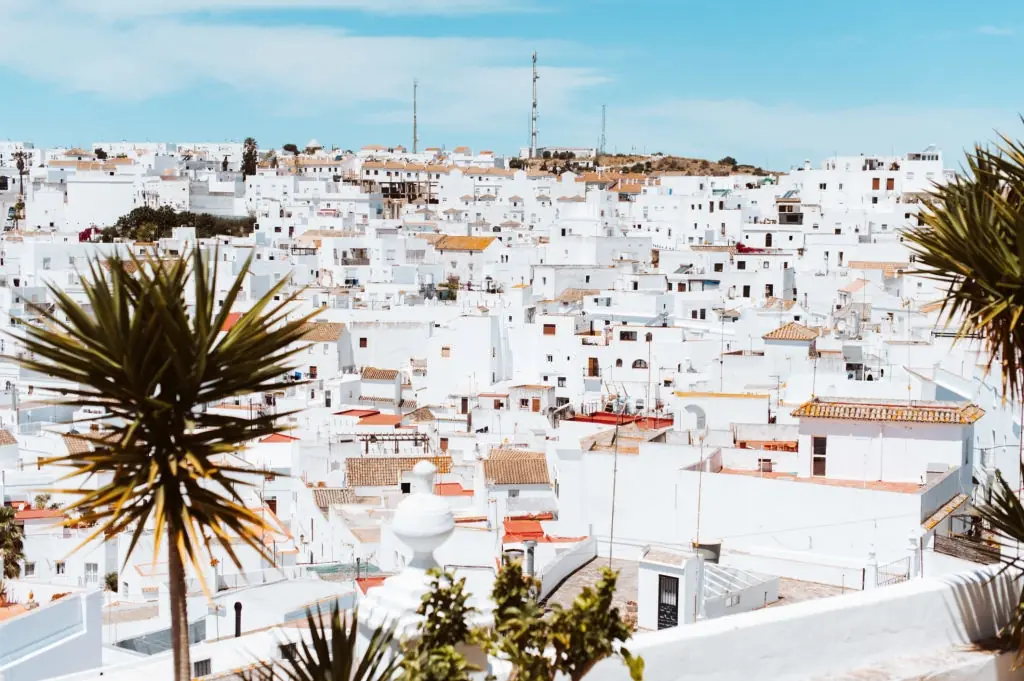
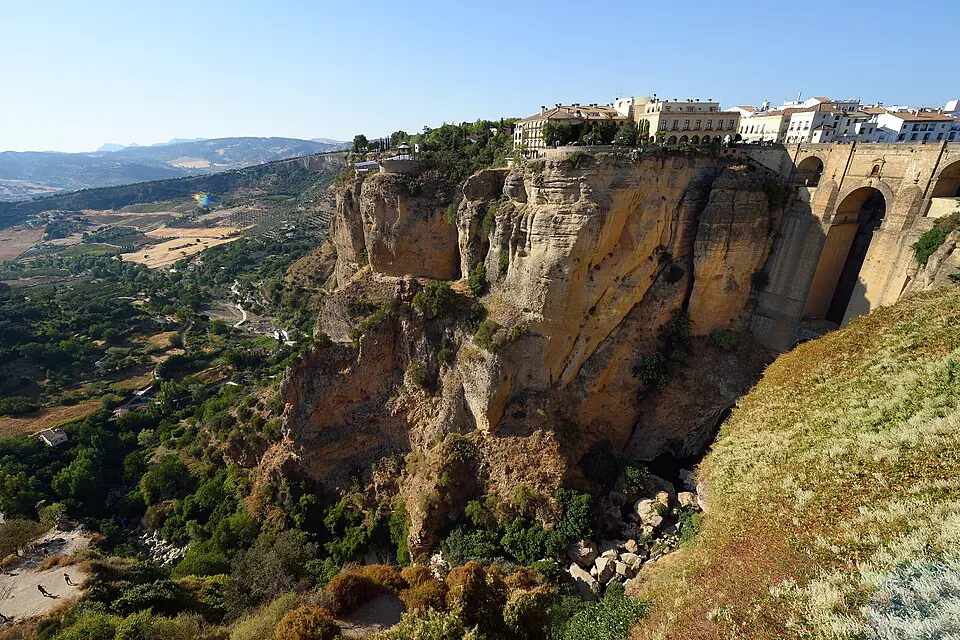
Ninety minutes to two hours south, Ronda stands where drama and engineering meet: the town splits across the hundred-meter El Tajo gorge, stitched by the Puente Nuevo — the “new bridge” finished in 1793 after four decades of work — and the view from the Cuenca gardens or the path below the bridge is the region’s single most photographed frame. The circuit: the old town’s palaces, Spain’s oldest bullring (taken as architecture and museum by conviction), the Arab baths, and the gorge-bottom walk for the upward angle most visitors skip.
The white villages string the route and justify the drive: Setenil de las Bodegas, where houses burrow under an overhanging rock ledge and the bar street runs beneath a cliff ceiling; Zahara de la Sierra on its castle crag over a turquoise reservoir; and Grazalema, the mountain-park base with the region’s best walking (and, counterintuitively, some of Spain’s highest rainfall — hence the green). Olvera and Arcos extend the collection for completists.
This is a driving day — the villages defeat public transport schedules — best as Ronda-plus-two-villages rather than a checklist sprint. Midday coaches hit Ronda hard; the villages before 11 or the bridge at dusk restore the silence. The payador stops for payoyo cheese and mountain honey are the souvenirs that survive the suitcase.
Read the full Ronda day-trip page.
Cádiz — The Oldest City on the Water
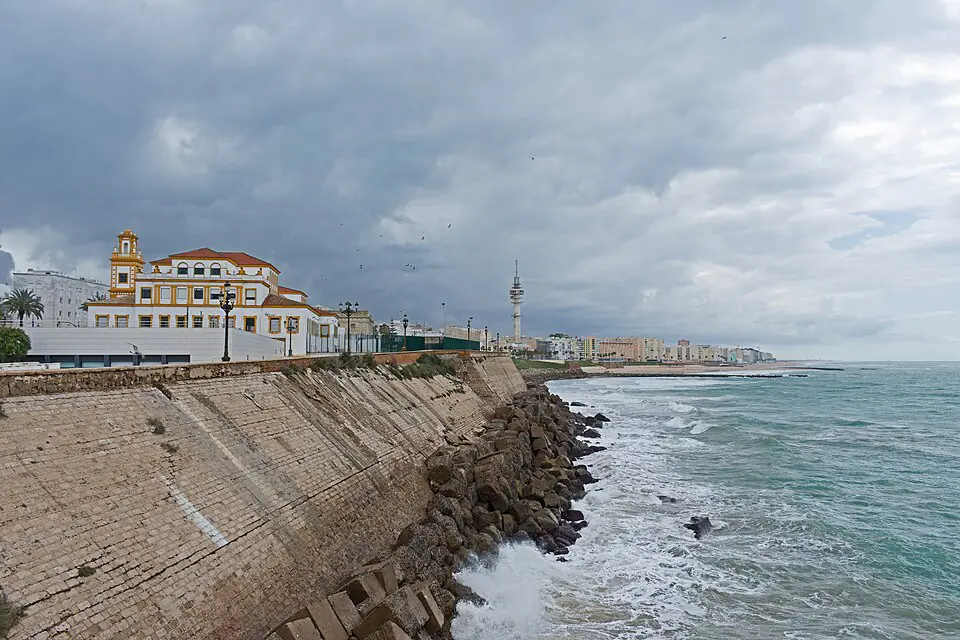
An hour and a quarter southwest, Cádiz claims three thousand years — founded by Phoenicians, older than Rome — and wears them lightly on a peninsula so sea-wrapped the old town reads like a docked ship. The circuit: the golden-domed cathedral and its tower view, the Torre Tavira’s camera obscura sweeping the rooftops live, the Roman theatre tucked under the Pópulo quarter, and the Genovés park’s dragon trees against the Atlantic.
The beach fact that surprises visitors: La Caleta — the crescent between two sea forts where the old town simply ends in sand — puts a genuine swim inside a three-millennia city, and Victoria beach beyond the walls runs the long Atlantic version. The eating rules: fried fish by the paper cone (pescaíto frito is the civic cuisine), tortillitas de camarones crisped at the market bars, and the Mercado Central as the graze headquarters.
The calendar note: February–March’s Carnival is Spain’s sharpest — satirical singing troupes, weeks of it, rooms booked months out — attended deliberately or scheduled around. The frame: train-friendly, flat, unhurried — the gentlest full day on this list, and the correct antidote to monument fatigue. El Puerto de Santa María across the bay adds the sherry-adjacent extension.
Read the full Cádiz day-trip page.
Jerez — Sherry and Horses
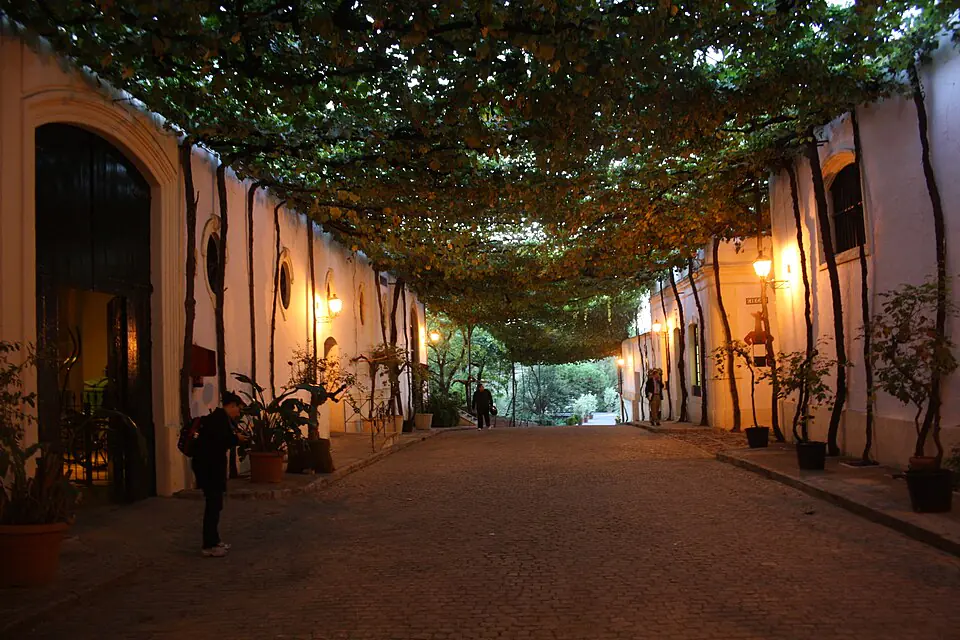
Forty-five minutes south, Jerez de la Frontera runs Andalucía’s two proudest performances. The sherry first: the bodegas of the “sherry triangle” age their soleras in cathedral-cool warehouses, and the tours — from the historic houses’ polished circuits to family-run almacenistas — end in tastings that recalibrate anyone who thought sherry meant sweet: fino and manzanilla pour bone-dry and cold, and the tabanco taverns around the center serve them by the glass with flamenco on weekend nights. Book the English-language bodega slots ahead; the venencia pour is the show within the show.
The horses second: the Royal Andalusian School of Equestrian Art stages “How the Andalusian Horses Dance” — the full dressage ballet under chandeliers — on set days (typically midweek; check the current calendar and book ahead), with training-session visits on non-show mornings as the cheaper, quieter alternative. The stud farms outside town run the deeper program for the devoted.
The stack: the Alcázar’s gardens and camera obscura, the cathedral’s tilted bell tower, and the gitano quarters of Santiago and San Miguel — flamenco’s genuine cradle, where the peñas keep it unstaged. Bodega morning, horses midday, tabanco evening — and a designated driver or the train, decided before the first fino.
Read the full Jerez day-trip page.
Itálica & Carmona — The Roman Half Day
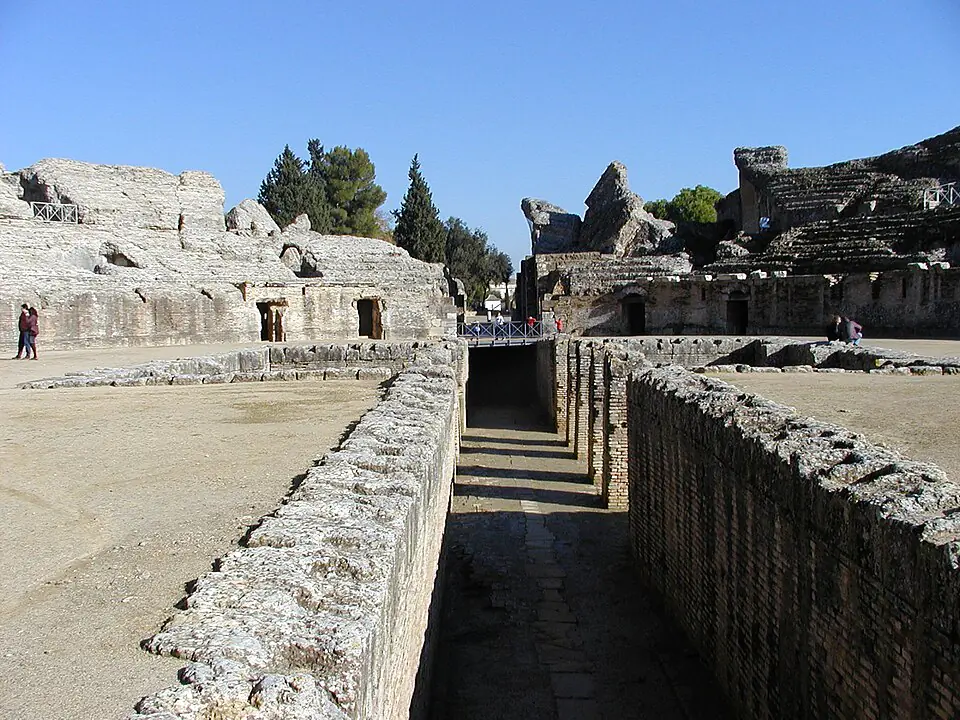
The close pair fills the gap other cities cover with distance. Itálica, thirty minutes northwest at Santiponce, was Rome’s first city in Spain and the birthplace of emperors — Trajan and Hadrian both — and its amphitheatre, among the empire’s largest, seats visitors in the same vomitoria that television’s dragon-pit scenes made newly famous. The mosaic floors of the Neptune and Birds houses survive in place; the site rewards ninety unhurried minutes and an early start in summer (shade is theoretical).
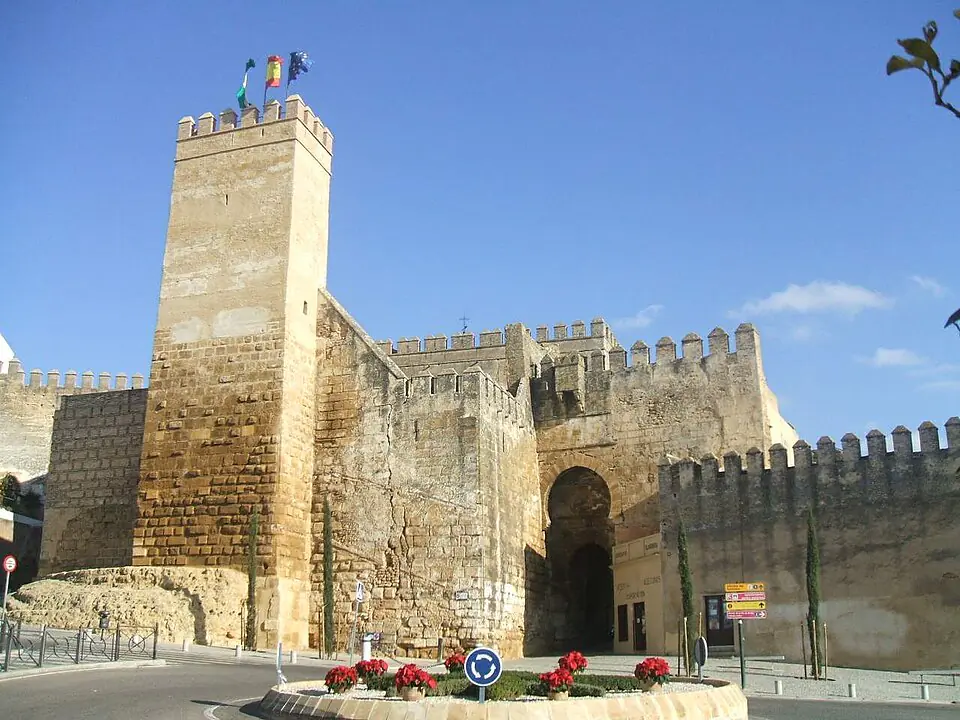
Carmona, thirty minutes east, layers everything Andalucía has ever been onto one ridge: the Roman necropolis with its subterranean tombs (the Elephant Tomb included), the Puerta de Sevilla’s stacked fortifications, whitewashed lanes to the Puerta de Córdoba, and the parador in the upper alcázar whose terrace is the region’s best coffee view — the plains of the Guadalquivir running to haze.
Both are short-hop, low-cost, and combine into one satisfying day with lunch in Carmona’s plaza — the connoisseur’s alternative when the AVE cities feel like too much itinerary. Spring wildflowers turn Itálica’s ruins photogenic; August turns them into a kiln.
Read the full Itálica day-trip page.
Read the full Carmona day-trip page.
The Alcázar Rules, Triana & Seville Itself
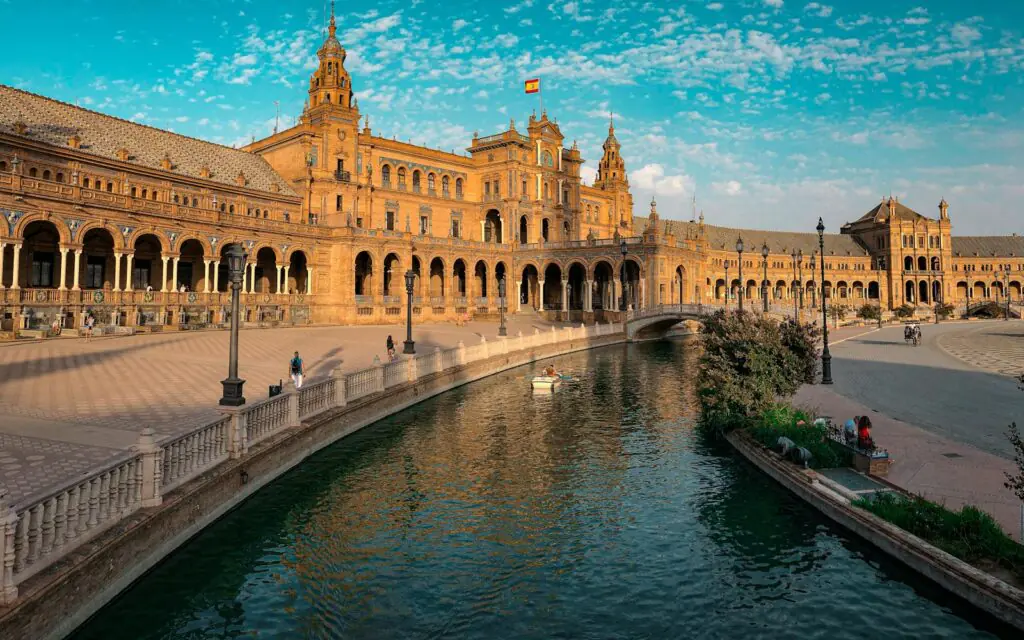
The Real Alcázar mechanics, because they decide mornings: Europe’s oldest palace still in royal use runs on timed tickets that sell out days-to-weeks ahead in season — book on the official site (alcazarsevilla.org; the same lookalike-domain caution applies), take the first slot for the Mudéjar courtyards at their emptiest, and know the Cuarto Real Alto (the royal upper rooms) is a separate small-group ticket worth its supplement. The gardens absorb whatever time the palace leaves.
The cathedral pairs with it: the world’s largest Gothic church, Columbus’s tomb aloft on its four bearers, and the Giralda — the former minaret climbed by ramp, not stairs, because the muezzin rode a horse up. Book the combined-entry times online; the rooftop tours add the flying-buttress view. The Plaza de España’s tiled provincial alcoves and rowing moat close the monumental circuit for free.
The living city: Triana across the bridge — ceramics workshops, the market on the old inquisition site, and flamenco in its home quarter (the peñas and smaller tablaos beat the dinner-show barns); the Setas’ undulating rooftop walk at sunset; and the tapas rules — stand at the bar, order in rounds, one dish per bar, move (espinacas con garbanzos, carrillada, and the vermouth tap are the local defaults). Season math: March–May is the glory window (orange blossom, Semana Santa’s processions and the Feria’s casetas — both of which double prices and halve availability, planned for or around); July–August runs 40-plus degrees with the city built for it (life happens before 11 and after 8); and October reopens the terraces for the second spring.
Frequently Asked Questions
How do you get Mezquita tickets?
On the official Cabildo site — mezquita-catedraldecordoba.es — with timed slots about two months out; morning slots go first, and lookalike domains mark up the same tickets. Weekday early mornings offer a free, quieter access window before regular hours.
Is Ronda doable without a car?
Ronda itself, yes — trains and buses run. The white villages around it, realistically no: Setenil, Zahara, and Grazalema defeat public schedules, so drive or book a small-group day and take Ronda plus two villages at a sane pace.
When do the Jerez horses perform?
The Royal Andalusian School’s full show runs on set days, typically midweek — check the current calendar and book ahead. Training-session mornings are the cheaper alternative; pair either with a bodega tour and a tabanco evening.
Is Cádiz worth it against the inland cities?
As the exhale day, absolutely — three thousand years of city wrapped in Atlantic, with La Caleta’s swim inside the old town and fried fish by the cone. Flat, train-friendly, and the antidote to monument fatigue.
How far ahead should you book the Seville Alcázar?
Days ahead minimum, weeks in high season — timed slots only, on the official site, with the first morning slot as the connoisseur’s pick and the Cuarto Real Alto worth its separate ticket. Semana Santa and Feria weeks sell out everything at once.