Jerez by Train
An hour south, the city that gave sherry its name runs bodega tours by timed booking and horse ballet by calendar. Book both before the train — then end where Jerez actually lives: a tabanco with the barrels talking.
The short version
- Trains run Santa Justa to Jerez in about an hour on the Cádiz line at steady frequency — fares at renfe.com; the center walks from the station in fifteen flat minutes.
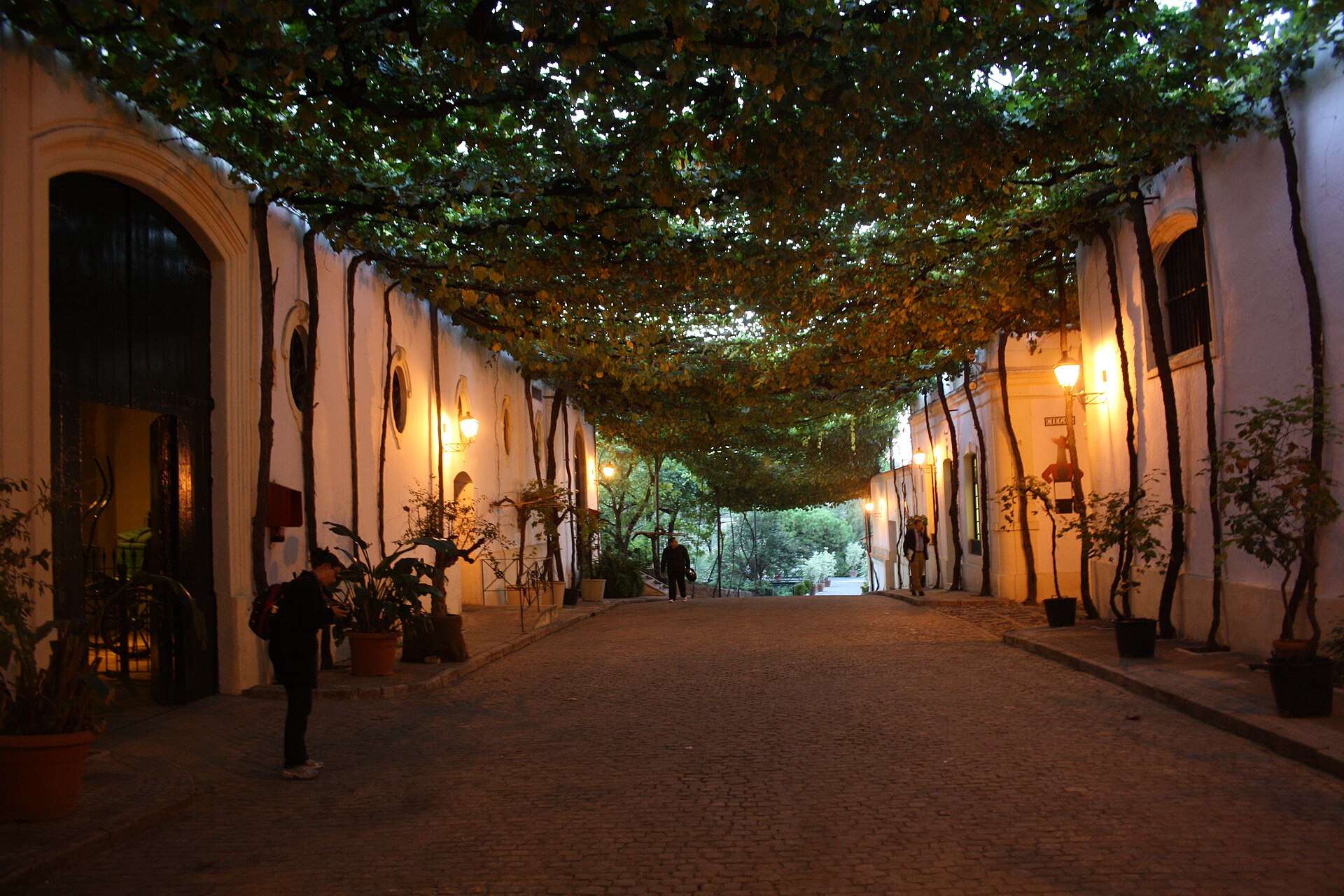
- The bodega tour is the anchor: the great houses (González Byass’ Tío Pepe complex, Fundador, Lustau among them) run timed visits with tastings around €20–30, booked ahead per the alarm — cathedral-scale cellars, the solera system explained, and the flor under glass.
- The Royal Andalusian School of Equestrian Art stages ‘How the Andalusian Horses Dance’ on scheduled show days — roughly €21–27 by seat — with open training sessions on most other mornings at lower prices; the calendar check at realescuela.org is the alarm’s second booking.
- Sherry’s range is the tasting’s real lesson: bone-dry fino and manzanilla through amontillado and oloroso to PX’s black sweetness — the tour pours the spectrum and the tabancos pour it nightly by the glass at pocket prices.
- Jerez claims a cradle share of flamenco with full credentials — the Barrio Santiago’s peñas and the tabancos’ informal sessions carry it live, strongest in the evening hours the day-trip clock can catch on late trains.
- The Alcázar’s Almohad walls and camera obscura, the cathedral’s tilted belfry (a former mosque minaret’s descendant), and the old quarter’s orange-tree squares fill the hours between bookings.

Getting there
The Cádiz-line trains make Jerez a turn-up ride; the two bookings — bodega slot and horse calendar — are the actual logistics, made before departure per the alarm, with the day’s shape falling out of their times. The classic geometry: horses in the late morning (show days start around noon; training sessions run earlier), bodega tour early afternoon, tabanco hour before the evening train. Sherry math applies to drivers with full force; the train exists so nobody has to do that math.
The day
Open with the Alcázar’s walls and the camera obscura’s live-city show, then the cathedral’s leaning tower en route to your first fixed point. The equestrian school delivers by calendar: the full show’s choreographed haute école on performance days, or the training session’s working version — riders schooling the movements without the theater, per the alarm’s nearly-as-good clause. The bodega tour anchors the afternoon: cellars built like naves, barrels chalked in cellar-master shorthand, the solera’s fractional patience explained, and the tasting flight that reorganizes what you thought sherry was. Then the tabanco hour as the day’s true destination — Tabanco El Pasaje and its kin pour from the barrel with tapas and, some evenings, flamenco at conversational distance. The late trains back to Seville run often enough to let the second glass happen.
When to go
March to June and September to November run the walking-and-patio weather; May’s Feria del Caballo is Jerez at full dress — horses through the streets, casetas open to all (a friendlier feria than most), and every bed booked. September brings the harvest and its festival’s first-pressing ceremonies. Summer runs hot with the bodegas’ cool cellars as the built-in refuge; winter is quiet, mild, and the tabancos’ season by temperament. The two calendars — show days and bodega slots — matter more than the weather in every month, which is why the alarm put them first.
Frequently Asked Questions
Which bodega should I book?
González Byass for the full Tío Pepe theater (the scale, the Apostles’ barrels, the train through the grounds), Lustau or Tradición for smaller-room seriousness, Fundador for brandy alongside. Any of the majors delivers the solera lesson; the choice is scale versus intimacy, not quality.
What’s actually the difference at the training sessions?
No music, costumes, or choreographed program — instead the real schooling of the movements, often at closer quarters, at roughly half the price. Horse people sometimes prefer it; show-seekers should hold out for performance days. The calendar decides.
Is the flamenco accessible to a day-tripper?
The tabancos’ early-evening sessions are the honest window — informal, free-to-cheap, and genuinely local. The peñas and tablaos run later than the sensible last train. Committed listeners book a Jerez night; the day trip catches the warm-up.
Jerez or Cádiz on the same line?
Cádiz (documented on this network) for sea, seafood, and street life; Jerez for sherry, horses, and flamenco’s inland register. The line serves both — the greedy split one day at real cost to each, the wise take two.
What do I bring home?
A bottle from the bodega shop — an amontillado or palo cortado you tasted, categories supermarkets flatten — and vinegar from the same houses if you cook. The tabancos sell nothing but the evening, which is the better souvenir anyway.