Ronda and the Gorge
A town split by a hundred-meter gorge and stitched back together by one bridge. The bus gets you there; the path below the bridge is the visit.
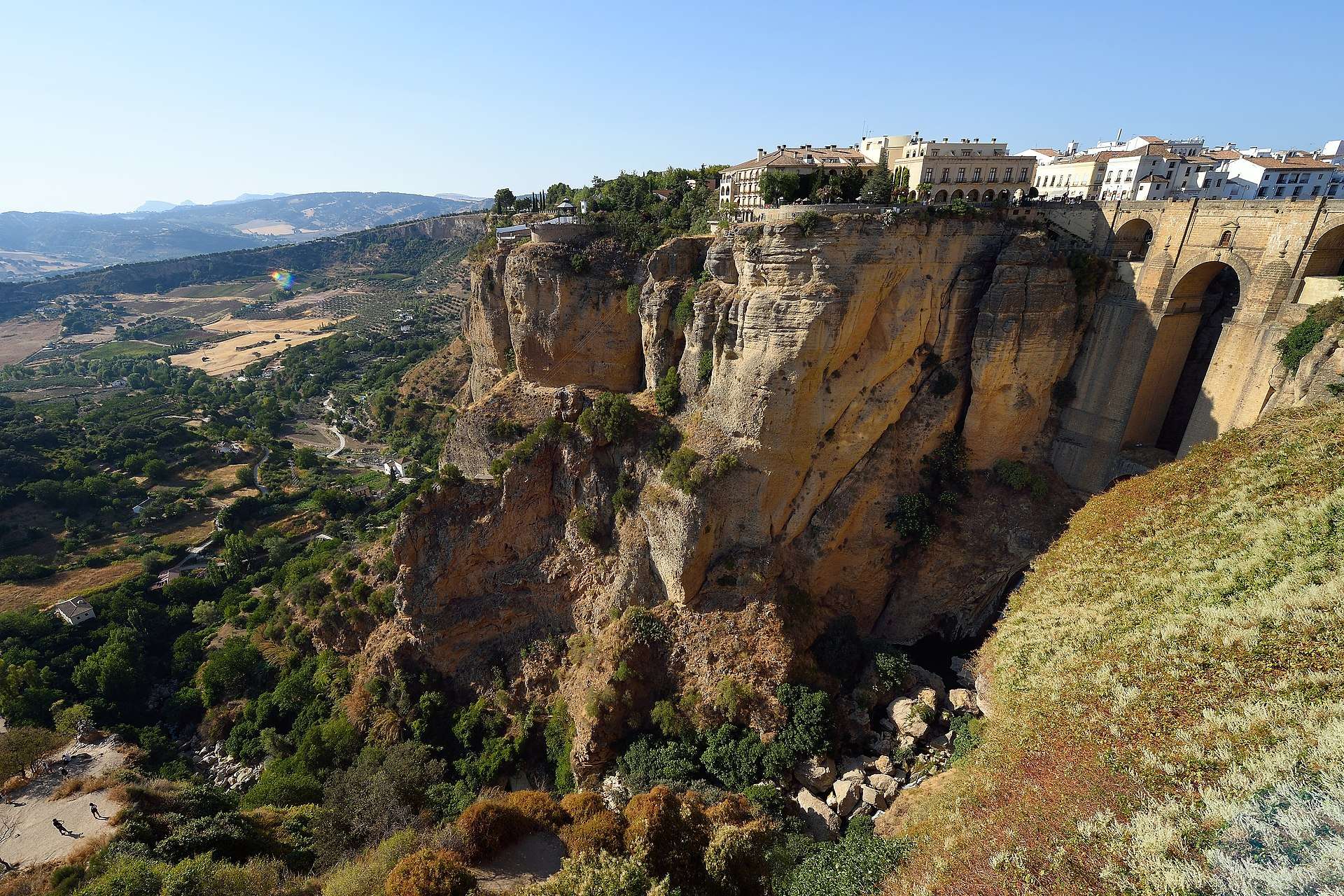
The short version
- Direct buses run Seville to Ronda in under two hours from Prado de San Sebastián; the rail option involves changes and loses the race. Regional connections at renfe.com for those coming from other directions.
- The Puente Nuevo spans the hundred-meter El Tajo gorge — eighteenth-century engineering that took forty years and remains the town’s whole postcard.
- The path from the old town down toward the Arco del Cristo gives the from-below view of the bridge that the from-above crowds never see.
- The Plaza de Toros is among the oldest bullrings in Spain and the home of the Romero dynasty; the visit covers the ring, museum, and stables regardless of your view of the subject. Town information at turismoderonda.es.
- The Baños Árabes below the old town are the best-preserved Arab baths in Andalusia, star-pierced vaults intact.
- The Casa del Rey Moro’s water mine descends the gorge wall by 200-odd cut steps — a knee tax with a river payoff.

Getting there
The bus is the honest answer from Seville: direct services from Prado de San Sebastián station take just under two hours through white-village country, and book the return at the same time on busy weekends. The train routes via a change and adds an hour. Drivers can fold Ronda into a white-villages loop — Grazalema and Zahara sit within reach — but the town alone fills the day arriving by bus.
The day
Start at the bridge but do not stop there: take the path down the gorge side to the lower viewpoints while the morning light hits the bridge face — the twenty-minute descent is the single best thing in Ronda and the first thing to get done. Back up top, work through the old town: the Arab Baths, the palaces on the cliff edge, Casa del Rey Moro’s mine for the willing. Lunch long over the gorge — several terraces hang right on it — then the bullring and the Alameda’s cliff-rail views before the evening bus. The town empties beautifully after the day-tour coaches leave; late-bus travelers get the best hour.
When to go
Spring and late autumn bring walking weather and green to the gorge; summer cooks the paths by noon and argues for the earliest bus. The September feria fills the town for its historic corrida — book everything or avoid the week. Winter is quiet, occasionally fog-filled in the gorge, which produces the strangest and best photographs the town offers.
Frequently Asked Questions
Bus or train or tour from Seville?
The direct bus wins on time and price. Tours bundle Ronda with white villages efficiently at the cost of the empty-town evening hours; the train is the scenic long way, better from Málaga’s direction.
Is the bullring visit uncomfortable?
The visit is a museum of the building and its history, with no events most days. Many visitors with no taste for the corrida still rate the architecture; the choice is straightforwardly yours.
How hard is the gorge path?
Steep, uneven in stretches, and fully worth it — twenty minutes down, thirty back up. Real shoes and water in summer; skip it only on icy winter mornings.
Can I add a white village?
With a car, easily — Grazalema or Setenil pair naturally. By bus, Ronda alone is the day; Setenil connections exist but turn the schedule fragile.
Where is the famous view of the bridge?
From below: the mirador paths off the old town’s south side. The top of the bridge is where you stand; the bottom of the gorge is where you look from.